How Smart Thermostats Can Save Your AC from an Expensive Crash
In Phoenix, AZ, air conditioning is a life-safety system. Summer highs sit above 110°F across the Valley of the Sun, and a single failure can escalate from discomfort to property risk within hours. Day & Night Air Conditioning, Heating, & Plumbing sees the same pattern each peak season: good systems failing for preventable reasons. A smart thermostat, correctly set up and paired to the equipment, can stop many of those breakdowns before they start.
This article explains how control logic, sensor feedback, and staged operation reduce stress on compressors, blowers, and coils. It also connects those controls to local realities from Ahwatukee Foothills to Desert Ridge. For homeowners and building managers searching “AC repair Phoenix” or “emergency air conditioning repair near me,” it shows how an affordable control upgrade defends a far more expensive asset.
Why control is the difference between a nuisance call and a compressor failure
Air conditioners in Phoenix work longer duty cycles than almost anywhere in the country. Long runtimes, hot attics, sun-baked rooftops, and dust move mechanical parts toward failure. The quickest path to an expensive crash is repeated stress on the compressor and start components. Short cycling, high head pressure, and frozen evaporator coils show up first. Then come burned contacts, swollen capacitors, and a locked rotor.
A smart thermostat alters the sequence that causes these failures. It stretches runtimes when needed, inserts protective delays, and limits aggressive staging on extreme afternoons. It can also sense humidity, temperature trends, and even coil freeze risk if paired with add-on sensors. That shift from “simple on/off” to “supervised operation” lowers amperage spikes, reduces thermal shock, and holds airflow steadier through dirty-filter periods or partial duct restrictions common in older Phoenix homes.
Common Phoenix AC breakdowns that better controls can prevent
Calls across Arcadia, Biltmore, Paradise Valley Village, and Sunnyslope tend to track a few root causes. When a system blows warm air in 85018 or 85016, technicians often find low R-410A charge, tripped safeties, or a heat-soaked condenser fan. On high humidity days after a monsoon surge across Maryvale or South Mountain, clogged condensate drain lines shut systems down. On rooftops near Camelback Mountain and the Biltmore corridor, contactors pit and stick after heavy afternoon staging. Inside older air handlers in North Mountain and Sunnyslope, blower motors squeal from worn bearings after long duty cycles under dust load.
Here are the patterns seen most in severe heat:
Short cycling: Rapid start-stop cycles boil the oil from the compressor’s crankcase and pound start capacitors. A control that imposes minimum run and off times breaks the loop. The compressor sees fewer inrush currents. Contactors pit far more slowly.
Frozen evaporator coils: Low airflow or low refrigerant pushes coil temperature below freezing. Ice forms on the copper refrigerant lines and the evaporator. A thermostat with humidity sensing, fan run-on, and adaptive staging can slow coil freeze progression. It can also alert the owner early.
High head pressure: Attic and rooftop temperatures raise condensing temperatures. Aggressive staging can spike head pressure, trip limits, and overheat windings. A control that softens staging and respects recovery times cuts the peak load on the compressor.
Over-dehumidification in monsoon surges: Long cooling cycles with low fan speeds can drop coil temperature too far during humid events. The coil ices, the system trips, and the home warms fast. Humidity-aware setpoints and controlled fan profiles help keep the coil above freezing without losing comfort.
How a smart thermostat defends the system under Phoenix heat
Smart thermostats do more than schedule temperatures. They mediate between the home and the HVAC system to avoid failure modes. Key controls and their effects:
Compressor short-cycle protection: Minimum on and off timers shield the start capacitor, contactor, and windings. This reduces locked-rotor conditions after brief power interruptions in areas near Phoenix Sky Harbor International Airport or high-density blocks near Chase Field.
Staged cooling logic: On two-stage or variable-capacity systems, adaptive staging starts at a lower capacity stage. It allows the condenser coil and compressor to stabilize. This tempers head pressure, especially on rooftop units in Desert Ridge, 85050, and 85032.
Fan run-on: Keeping the indoor blower moving air for a set time after the compressor stops pulls extra BTUs off the evaporator coil. This reduces freeze risk and improves latent removal in humid periods near Papago Park and the Phoenix Zoo area.
Humidity integration: Controls target both temperature and relative humidity. They protect against coil icing during monsoon humidity across South Phoenix and the Salt River corridor by moderating fan speed and runtime.
Defrost and heat pump safeguards: Many North Phoenix homes use high-efficiency heat pumps. Integrated defrost control and balance points prevent unnecessary auxiliary heat calls and protect outdoor units in 85085 where evening desert air drops fast.
Alerting and early warning: Notifications for long runtimes, failed calls for cooling, or abnormal temperature decay give a homeowner time to act before a full outage. That warning matters when pets and older family members rely on stable indoor temperatures.
What the data shows during a Phoenix summer
Across Phoenix, two variables predict early breakdowns: cumulative run-hours at high ambient temperatures and the number of compressor starts per day. Lowering daily starts by 20 to 40 percent has an outsized impact on start capacitor life. Reducing condenser head pressure during peak sun hours reduces stress on the compressor and on contactors that switch high current loads. Smart thermostats, when paired with two-stage compressors or variable-speed systems, achieve both.
Day & Night technicians see better coil conditions as well. Systems under humidity-aware controls carry fewer ice events and show less oil-stained residue that signals refrigerant leaks. While a thermostat cannot seal a leak or replace a TXV, it can limit the runtime abuse that pushes a marginal system into failure on a 115°F day.
Control strategies that save real money on repairs
Protective delays and staging preserve expensive parts. Compressors, blower motors, and expansion valves last longer when run patterns are smooth. Good controls are proactive, not reactive. Here is what changes after a correct thermostat upgrade and setup:
Start capacitors and contactors stop failing in clusters after the first June heatwave. Lower start counts and controlled staging slow the wear curve. Day & Night stocks heavy-duty start capacitors and universal contactors on service trucks, but fewer visits for those parts mean fewer emergency calls for the homeowner.
Compressors run cooler and lock up less often. When a thermostat stretches cycles, compressor shell temperatures trend lower. Lockouts drop. So do energy spikes seen on APS and SRP time-of-use plans that punish heavy peak loads.
Evaporator coils ice less frequently. With humidity control and fan run-on, the coil spends more time above freezing. The copper refrigerant lines outside the air handler stop frosting. The system stops short cycling itself off safeties.
Drain lines clog less often. Longer fan run-ons dry the pan more completely in humid weather. Systems in Ahwatukee Foothills and South Mountain show fewer float-switch trips during monsoon surges.
Appliance types in Phoenix and how controls vary
Central air conditioners: Most Phoenix homes in Arcadia, Biltmore, and Maryvale rely on split systems. Smart thermostats set correct compressor delays, handle two-stage logic, and manage fan speed on systems with communicating air handlers.
Heat pumps: Popular in North Phoenix and Desert Ridge, heat pumps benefit from advanced defrost coordination and auxiliary heat lockouts. The right thermostat reduces unnecessary heat strip use on shoulder-season mornings.
Ductless mini-splits: Older masonry homes near the Arizona State Capitol and historic districts often use ductless systems. Wall-mounted controls already manage modulation, but a central smart thermostat with a gateway can coordinate zones and occupancy.
Package units and rooftop units (RTU): Common on ranch homes and light commercial buildings from Sunnyslope to Paradise Valley Village. Added control of staging and fan profiles helps on hot roofs where radiant load is severe. Economizer lockout and supply-air monitoring reduce coil stress.
Parts, symptoms, and what a thermostat can and cannot fix
Parts that fail from stress: Start capacitors, contactors, relay switches, and fan motors suffer first in Phoenix heat. Compressors and condenser fan motors follow. Restricted MERV filters and dusty evaporator coils push systems into high static pressure, which drives up amperage and blower temperature. A thermostat cannot clean a coil, but it can back off harmful staging and flag the problem early.
Symptoms to watch: Short cycling, warm air at the registers, ice on copper refrigerant lines, high energy bills, and squealing blower motors are early indicators. If the system trips breakers or the condenser fan stops while the compressor hums, immediate service is needed. Day & Night’s technicians run deep diagnostics on the HVAC compressor, condenser coil, blower motor, expansion valve, contactors, and air handler to catch the root cause instead of treating a symptom.
Where controls stop and tools start: If there is a refrigerant leak on an R-410A system, a licensed HVAC contractor must locate and repair it. If a compressor has burned windings, it needs replacement and a system cleanup. If a condensate drain is clogged, clearing and treating it is required. The best control in Phoenix is a smart thermostat plus routine HVAC maintenance, including coil cleaning, filter checks, and electrical inspections during spring and fall.
Brand coverage and local experience that matches Phoenix housing stock
Day & Night services Trane, Carrier, Lennox, Goodman, Rheem, York, and Bryant every day across Maricopa County. For high-end performance, the team also supports Daikin, Mitsubishi Electric, and American Standard systems. Many North Phoenix homes run high-efficiency heat pumps from Trane and Carrier. Arcadia and Biltmore see Carrier and Lennox rooftop package units. Older Maryvale and Sunnyslope properties often rely on Goodman and York split systems. New builds in Desert Ridge and Paradise Valley Village trend toward variable-speed, high-SEER systems with communicating controls.
Factory-authorized service protects SEER ratings and manufacturer warranties. Using genuine OEM parts for control boards and sensors preserves performance curves. A thermostat upgrade should be matched to the equipment brand and model, with attention to staging signals, outdoor temperature sensors, and any proprietary communication bus. A mismatch wipes out the benefits and can trigger error codes that look like equipment failure.
Neighborhood and zip code realities across the Valley
Local conditions change how a system should run:
Arcadia and 85018: Abundant block construction, remodels with mixed ductwork, and many rooftop units. Controls need flexible staging and humidity logic to avoid afternoon bounce after west exposures.
Biltmore and 85016: Condos and townhomes near Camelback and 24th Street see stacked mechanical rooms and tighter airflow paths. Thermostats should cap staging to avoid head-pressure trips late afternoons.
Paradise Valley Village and Desert Ridge, 85032 and 85050: Two-story homes with long duct runs to second floors. Smart thermostats with sensor averaging help stabilize bedrooms and reduce overnight short cycling.
North Mountain and Sunnyslope: Older split systems with blend of original ducts and add-ons. Control that flags long runtimes and filter alerts prevents coil icing in partially restricted returns.
Ahwatukee Foothills and South Mountain: Monsoon humidity can spike. Humidity-aware setpoints protect evaporator coils and prevent pan overflows and safety switch trips.
Downtown near Chase Field and Footprint Center: Heat islands drive rooftop temperatures far above ambient. Staging soft limits and fan profiles prevent tripping on high head pressure.
Energy rate plans, pre-cooling, and compressor health
APS and SRP time-of-use plans push heavy penalties during peak windows. A smart thermostat can pre-cool ahead of peak and coast through with moderate fan speeds. This keeps indoor conditions livable without slamming the compressor at the worst hour. Reduced peak starts are good for energy bills and for hardware. Seen across Phoenix 85021 and 85044, homes that pre-cooled by 2 to 3°F for 90 to 120 minutes needed 15 to 30 percent fewer peak starts compared to a static schedule.
Pre-cooling pairs with staged cooling to avoid sudden demand spikes. Demand response options can also cue minor setpoint bumps to prevent a hard shutdown in grid events. That lower stress window reduces the chance of a burned-out compressor on a hot rooftop unit facing direct sun.
Thermostat features that matter in Phoenix heat
A feature list has real service value when it tracks to failure modes. The best controls include these functions for desert climates and long cooling seasons:
- Minimum on/off times for compressors to stop short cycling under partial cloud cover and quick temperature swings.
- Staged cooling with adaptive logic to ease into full capacity on sweltering afternoons and protect head pressure.
- Humidity sensing and fan run-on to limit coil icing during monsoon surges and after filter loading.
- Sensor averaging across floors or key rooms to prevent hot-room calls that trigger unnecessary full-stage operation.
- Service alerts for abnormal runtimes, failed cooling calls, and drain switch trips to prompt early action.
Beyond these core items, integration with zoning, duct static monitoring, and outdoor temperature sensors closes more gaps. In larger homes near Paradise Valley and Scottsdale, multi-zone systems benefit from coordinated staging to prevent high static that strains blower motors and expansion valves.
Installation and setup make or break the upgrade
A smart thermostat that is not wired or configured to match the equipment can cause more harm than good. The setup needs to reflect whether the system is single-stage, two-stage, or variable capacity. It must know about heat pump reversing valves, auxiliary heat sources, and any dehumidification mode. For rooftop units and package units on older homes near the Heard Museum or Papago Park, correct fan profiles matter because duct static is often higher than design.
Day & Night’s NATE-certified technicians start with a system survey. They confirm model numbers for the air handler, condenser, and any zoning panel. They inspect the evaporator coil and measure blower amperage and temperature split. If the filter is overdue or the coil is dust-choked, they address those issues first. A shiny thermostat does nothing for a starved evaporator. After that, they map the thermostat to the equipment capabilities and the home’s use patterns. That is where pre-cooling strategies and occupancy schedules dial in.
Anecdotes from peak season service routes
Arcadia, late July, 85018: A two-stage Carrier system kept tripping on high pressure around 4 p.m. The thermostat was set to jump to stage two immediately on a 2°F delta. The fix was simple. Adjust staging delay to 12 minutes, lengthen minimum on time, and add a fan overrun. The problem vanished, head pressure readings dropped, and the next visit was a routine filter change, not an emergency call.
Desert Ridge, early August, 85050: A Trane heat pump struggled with iced coils during monsoon evenings. The thermostat had no humidity sensing and ran the blower at a fixed low speed. A humidity-aware control with dynamic fan and a coil-thaw logic routine ended the icing. Energy use in peak hours dropped about 10 percent, and the homeowner never saw frost on copper again.
Maryvale, mid-June: A Goodman split system with a tired start capacitor failed repeatedly after quick power flickers. The replacement capacitor solved the symptom. Enabling a 5-minute compressor restart delay on the thermostat prevented the repeat failure after the next flicker. Starts per day fell, and the contactor lasted the remainder of the season.
Maintenance still matters: the thermostat is not a magic fix
Controls protect, but they do not replace maintenance. Filters must meet MERV targets without choking airflow. Ducts should be sealed and sized to limit static pressure. The evaporator coil needs periodic cleaning, especially in homes near construction or heavy dust corridors. Blower wheels should stay balanced and clean to avoid motor overheating. Drains need cleaning and a maintenance dose of algaecide. Refrigerant circuits must be leak-free and charged to spec; guesses harm compressors. The thermostat helps by watching patterns, but a trained eye during a spring tune-up still catches what software misses.
Day & Night provides HVAC maintenance plans that include coil inspection, blower amperage checks, refrigerant measurements, and electrical testing on contactors and relay switches. A plan is especially valuable for systems on hot rooftops in 85044 and 85048 where UV and heat accelerate wear. It reduces emergency calls and supports warranty compliance on Trane, Carrier, Lennox, Goodman, Rheem, York, Bryant, Daikin, Mitsubishi Electric, and American Standard systems.
Commercial and light commercial takeaways
Rooftop units serving shops near Footprint Center and Chase Field endure punishment. Economizers stick. Condenser coils clog with dust. Packaged equipment cycles hard when a basic thermostat treats a 10-ton RTU like a small split system. Commercial-grade smart controls with supply-air temperature targets and lockouts keep coils within safe ranges. Scheduled pre-cool before opening hours avoids afternoon panic calls. Coordinated staging across multiple RTUs holds building demand in check under APS demand charges.
For commercial properties in Phoenix, the control upgrade pays back in fewer nuisance lockouts and in stabilized product or tenant comfort. It also reduces the frequency of burned contactors and overheated blower motors, both common failure points during 115°F weeks.
What a homeowner can do today to protect the AC
Basic steps start making a difference the same day. They reduce risk while a professional sets up deeper control logic. Keep lists short and practical.
- Replace the air filter with the correct size and an appropriate MERV rating for the system and duct static.
- Set a 5-minute minimum compressor off time in the thermostat to prevent short cycling after power blips.
- Enable fan run-on after cooling to clear latent load off the evaporator coil.
- Add a remote room sensor for upstairs bedrooms to limit aggressive staging from hot-room calls.
- Program pre-cooling ahead of APS or SRP peak windows to reduce peak starts and compressor stress.
If the thermostat cannot perform these steps, it is a signal to upgrade. Day & Night helps select a model that matches the system’s staging and local needs in Phoenix, Scottsdale, Tempe, Mesa, Chandler, Glendale, Peoria, Gilbert, and Paradise Valley.
Emergency AC repair remains one call away in Phoenix
Even with good controls, failures still happen. Lightning, motor bearings, and aged compressors sometimes reach their end. When a home in 85032 loses cooling at 8 p.m., waiting is not an option. Day & Night offers 24/7 emergency cooling services with same-day response across Phoenix and Maricopa County. Searching for “emergency air conditioning repair near me” from Arcadia or Biltmore connects quickly to dispatch. The fleet covers the Valley from Ahwatukee Foothills to Sunnyslope and from Paradise Valley Village to Maryvale.
Trucks carry the parts that solve the most common summer breakdowns. The inventory includes heavy-duty start capacitors, universal contactors, relay switches, blower motors, common fan blades, and condensate pump kits. That means many systems return to service on the first visit. For deeper repairs, technicians quote fixed prices before work starts. For homeowners comparing “AC repair Phoenix” options, that transparency reduces stress when the home is already hot.
Technical assurance and credentials
Day & Night fields NATE-certified technicians who work on central air conditioners, heat pumps, ductless mini-splits, split systems, package units, and rooftop units. The company is licensed, bonded, and insured under ROC #133378 and maintains a BBB A+ rating. That matters during warranty repairs on Trane, Carrier, Lennox, Goodman, Rheem, York, Bryant, Daikin, Mitsubishi Electric, and American Standard systems where correct parts and procedures protect coverage. It also matters when a home or business needs documented service for insurance or inspection in Phoenix, AZ.
Diagnostics include compressor amperage and megohm checks, condenser coil delta-T, expansion valve behavior, blower motor draw, static pressure across filters, and drain safety function. The goal is central air conditioning restoration, not a temporary patch. Good control settings follow the repair, so the failure does not repeat the next week.
Frequently asked questions Phoenix homeowners raise
Will a smart thermostat void the warranty? No, when matched to system capabilities and installed correctly, it preserves and can even support warranty compliance. Using OEM accessory kits is important on communicating systems.
Is humidity control worth it in Phoenix? Yes. During monsoon season, humidity rises, and coils ice faster. Humidity-aware setpoints improve comfort and reduce freeze-related shutdowns.
What if the system is old? A thermostat upgrade still reduces stress on a 10 to 15-year-old system. It will not fix wear in a blower bearing or a compressor near end-of-life, but it can extend remaining serviceable time and avoid a catastrophic failure during a heatwave.
Does pre-cooling raise bills? Usually no. It often lowers total cost on time-of-use plans because it shifts load off peak while easing compressor starts. Comfort stays steady with fewer high-amp peaks.
Can a thermostat diagnose a refrigerant leak? It cannot measure charge. It can show long runtimes and missed setpoints that suggest a problem. That pattern prompts a service call before a hot-day crash.
Smart thermostat selection for Phoenix homes
Selection should track the home’s size, duct layout, exposure, and current equipment. Two-story homes in 85050 or 85085 benefit from remote sensors and averaging. Homes with heat pumps in 85044 and 85048 need balance point control and better defrost coordination. Rooftop package units near downtown and the Warehouse District need staged control that respects high rooftop temperatures. Integration with zoning panels must be confirmed before ordering. For North Phoenix sunrooms or casitas, a Mitsubishi ductless mini-split with dedicated room control gives precise comfort while relieving the central system’s load.
Day & Night matches thermostats to Trane, Carrier, Lennox, Goodman, Rheem, York, Bryant, Daikin, Mitsubishi Electric, and American Standard systems daily. That alignment protects SEER and comfort while taming Phoenix heat stress.
Why this matters in Maricopa County
From Papago Park to Camelback Mountain, through Downtown, Midtown, and North Phoenix, the Valley is defined by extreme heat and long cooling seasons. Air conditioning is essential. A failed compressor on a 115°F afternoon endangers people and property. A low-cost control upgrade with correct setup reduces the chance of that event. When a breakdown happens, fast, qualified service that understands local housing stock, neighborhood patterns, and rooftop realities shortens downtime.
That is why a smart thermostat is not a gadget in Phoenix. It is a protective strategy that lowers emergency calls, preserves parts, and cuts the odds of an expensive crash. Paired with maintenance and reliable local service, it keeps homes and businesses safe through the Valley’s peak months.
Local signals that help Phoenix homeowners find real help fast
Search intent matters during a heat emergency. Homeowners in Arcadia, Biltmore, Desert Ridge, Paradise Valley Village, North Mountain, Maryvale, Sunnyslope, and South Mountain often search “AC repair Phoenix” or “emergency air conditioning repair near me.” Day & Night’s dispatch uses neighborhood routing to reach 85001, 85016, 85018, 85021, 85032, 85044, 85048, 85050, and 85085 quickly. The service area extends to Scottsdale, Tempe, Mesa, Chandler, Glendale, Peoria, Gilbert, and Paradise Valley. Landmarks like Phoenix Sky Harbor, Chase Field, Footprint Center, the Heard Museum, and the Arizona State Capitol serve as proximity anchors for route planning.
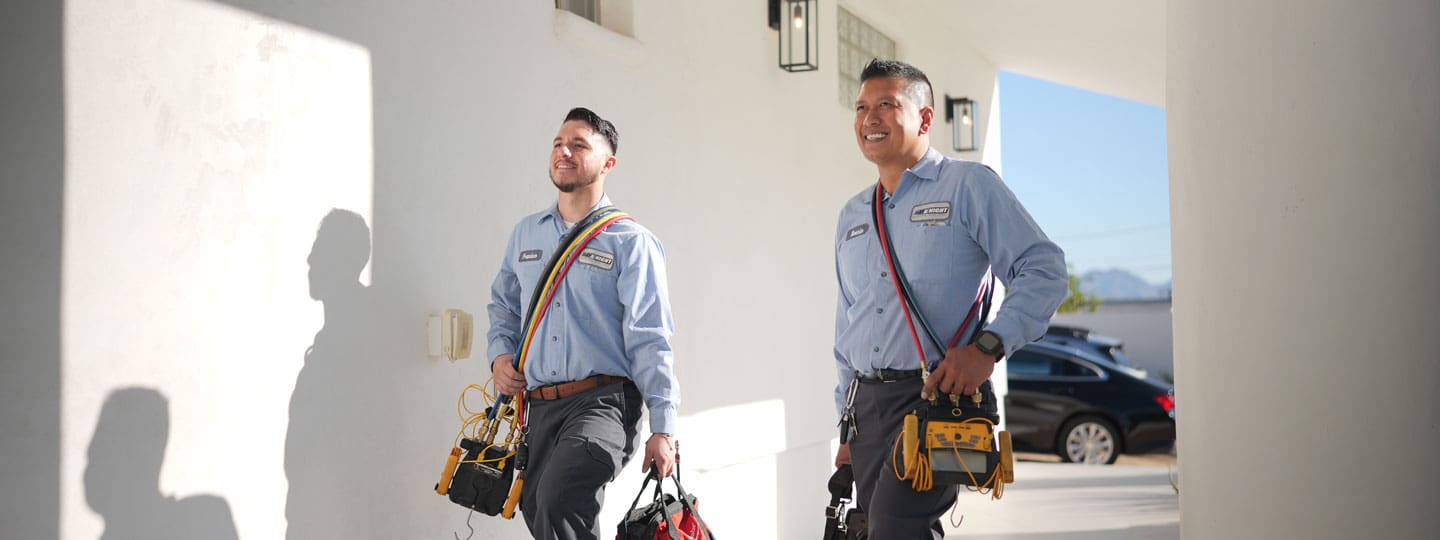
This local approach delivers the fastest arrival times possible during dangerous heat conditions. It also anchors real-world trust: uniformed, licensed crews arriving in marked vehicles, carrying the parts that fix common failures on the first visit.
Final takeaways for homeowners and property managers
Most Phoenix AC breakdowns are preventable. A well-chosen, correctly configured thermostat reduces mechanical stress, interrupts failure loops, and gives early warnings. That means fewer emergency calls and lower repair bills. When a failure happens, a local contractor with NATE-certified technicians, stocked trucks, and full brand coverage delivers relief fast, day or night. That is the path to stability through the worst weeks of a Phoenix summer.
Day & Night Air Conditioning, Heating & Plumbing 3669 E La Salle St,
Phoenix, AZ 85040 (602) 584-7758 www.dayandnightair.com AZ Licenses: ROC335883 | ROC335884 Google Maps | Facebook | Instagram | LinkedIn